
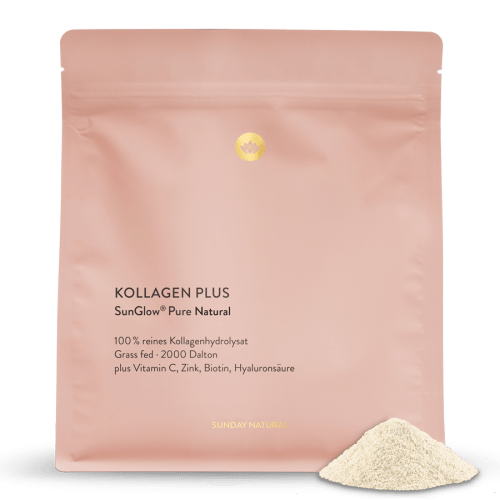


- SunGlow® Pure: high-quality collagen hydrolysate (from collagen types I and III) with a low molecular weight (2000 Da)
- Low molecular weight peptides of only 2000 Da for improved bioavailability and particularly easy absorption
- Fragmentation by purely enzymatic processes (non-GMO); complete avoidance of additional solvents
- Exceptionally purity and neutral taste due to intensive, multi-stage filtration and gentle ion exchange process
- Vitamin C as a special active ingredient PureWay-C®: vitamin C coated with bioflavonoids and plant fatty acids
- Particularly pure D-biotin (99.32% purity)
- 100% vegan hyaluronic acid from fermentation and as a special production (no molecular weight in the micro or nano range included)
- Zinc bisglycinate with particularly high bioavailability
- Tasteless and easily soluble due to purely physical micro-granulation (agglomeration)
- Heat-stable and safe: ideal for stirring into ready-to-drink coffee – no denaturation, no loss of ingredients, full enjoyment
Collagen Plus
SunGlow® Pure
Price per serving: £0.51
Servings: 45
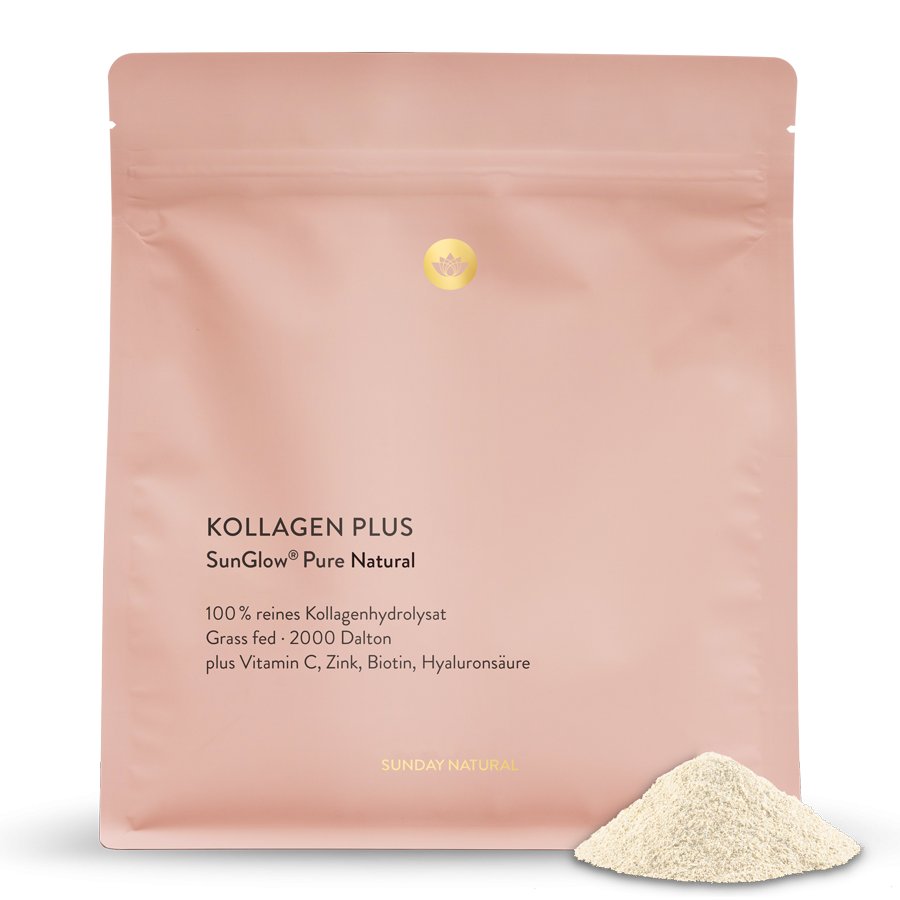
SunGlow® Pure Plus collagen hydrolysate (types I & III) from grass-fed cattle with low molecular weight peptides (2000 Da) plus hyaluronic acid, silica, vitamin C, zinc and biotin. Easily soluble, neutral taste. 457g powder
- Collagen hydrolysate (types I & III) plus hyaluronic acid, silica & other nutrients
- For beautiful, naturally radiant skin
- Goes further than standard formulas: only 10g per day
- Low molecular weight peptides (2000 Da) for improved bioavailability
- Vitamin C for collagen formation; zinc & biotin for normal skin
- True Clean Label: grass-fed, no unnecessary additives, laboratory tested
- Dissolve 2 scoops (10g) in 200ml water daily
£22.90
Premium Bioactive Ingredients
How are we different?
Our SunGlow® Pure Collagen Plus combines high-quality SunGlow® Pure bovine collagen hydrolysate (made from types I & III) – formulated with the strictly controlled brand raw material SunColl® – with a synergistic formula of vitamin C, bioactive D-biotin, zinc and hyaluronic acid.
Hydrolysis and enzymatic processes have broken this collagen down into an average molecular weight of 2000 daltons. This is smaller than most other collagen powders, which often have 2000–4000 daltons or more. These smaller peptides can be digested quickly by the body, resulting in a high proportion of tripeptides that are optimally absorbed. This is why a smaller portion is recommended: only 10.2g per day instead of 15g or more.
The collagen hydrolysate is synergistically supplemented with:
- Hyaluronic acid: an exceptionally pure, sugar-free sodium hyaluronate produced by 100% vegan fermentation
- Silica: silicic acid from bamboo shoots harvested at the age of 3–4 years, cut, ground and then extracted with pure water
- Vitamin C: the special active ingredient PureWay-C®, which is coated with bioflavonoids and plant-derived acids for improved bioavailability
- Zinc: bioavailable zinc bisglycinate
- Biotin: pure D-biotin
Premium Raw Material & Highest Purity
The high-quality collagen hydrolysate is based on our strictly controlled SunColl® standards and comes exclusively from cattle raised in a humane pasture-based system. The animals have access to open pastures, fresh grass and water, ensuring the highest quality raw material, which is transparently guaranteed by the seamless traceability system.
The entire production process is gentle and purely enzymatic. No solvents are used except water. The collagen peptides obtained in this way are also processed by ion exchange to ensure an exceptionally high level of purity. The collagen is free from antibiotic and hormone residues and from additives such as preservatives, sweeteners and flavourings.
Excellent Solubility & Neutral Flavour
Our collagen powder is highly soluble as a result of microgranulation; this targeted physical refinement prevents clumping – which occurs with regular powders – as the porous granules allow liquids to penetrate immediately and deeply. The quality and specific size of the bioactive collagen peptides (2000 Da) remain intact.
The formula's purity and absence of free amino acids give our SunGlow® Pure Collagen Plus a pleasantly neutral taste. It is heat-resistant and ideal for stirring into hot or cold drinks and foods without altering their taste.
We use particularly high-quality, airtight flavour protection bags with zippers for packaging. These offer a high level of protection against moisture and external influences.


Our commitment to uncompromising quality & purity:
- Premium active ingredients as pure isolates & directly sourced from leading global producers
- All formulations crafted exclusively from selected individual raw materials
- Our commitment: zero unnecessary additives, technical excipients or chemical extraction agents
- Voluntary declaration of all non-mandatory ingredients
- Where additives are necessary, preference is given to valuable natural ingredients
- Capsule shells entirely free from carrageenan & PEG
- Systematic quality testing conducted by independent laboratories
- Packaged in amber glass or premium aroma-protective zipper bags designed to protect against oxidation & contaminants
- All products entirely free from magnesium stearate, nanoparticles (without legal exceptions), GMOs, artificial colours & flavours, titanium dioxide
- Added sugar & sweeteners: used only where required for functional or product-specific reasons

Effects
Collagen is the most abundant protein in the human body, accounting for over 30% of total protein. It is a structural protein.
Synthesis and Metabolism
The body continuously produces collagen in a complex, nutrient-dependent process known as biosynthesis. During this process, individual amino acids are linked to form long polypeptide chains. A defining feature of collagen is its unique structure: the chains consist of continuously repeating tripeptide sequences (triple units) of glycine, proline and hydroxyproline. Three of these chains subsequently twist together to form an extremely tear-resistant structure. Vitamin C is required as an essential co-factor for this stable cross-linking.
Collagen Types
More than 28 different types of collagen have been identified in the human body, with types I and III being the most prominent:
- Type I Collagen: This type makes up the largest proportion (about 90%). It forms thick, fibrous bundles and is the main component of the matrix in skin, bones, tendons, ligaments and the cornea of the eye.
- Type II Collagen: This type forms the essential structural framework in the hyaline cartilage of the joints.
- Type III Collagen: This type forms finer, reticular fibres. It is physiologically found mainly in elastic tissues such as the skin, the walls of blood vessels and internal organs. It often occurs together with type I.
- Specialised Types: In addition, types such as type V (e.g. in hair) or type X (in bone tissue) contribute to the complex interaction of the matrix.
Hyaluronic Acid
Hyaluronic acid, also known as hyaluronan, is a long-chain polysaccharide with a high water-binding capacity and high structural viscosity (especially at medium and high molecular weights). It is often found in the skin and connective tissue, synovial fluid, tear fluid and the vitreous body of the eye.
According to the European Food Safety Authority (EFSA):
- Biotin contributes to the maintenance of normal hair and skin.
- Vitamin C contributes to normal collagen formation for the normal function of skin, cartilage, bones, gums and teeth, and to the protection of cells from oxidative stress.
- Zinc contributes to the maintenance of normal skin, hair, bones and nails, normal protein synthesis and the protection of cells from oxidative stress.

Dosage
Directions
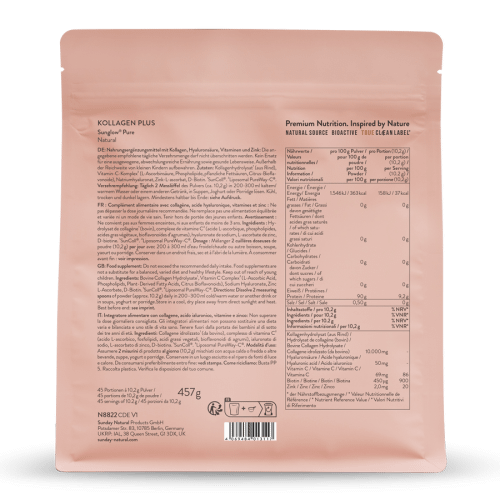
Dissolve 2 measuring scoops (10.2g) powder daily in 200–300ml cold or warm water or another drink. Alternatively, add the powder to soups, yoghurt or porridge.
Note: Due to its vitamin C content, this product is sensitive to heat. To ensure the vitamin C is effective, we recommend stirring the powder into cold or lukewarm drinks and foods (preferably below 40°C, maximum 60°C) and consuming immediately.
Food Supplement
The stated recommended daily intake should not be exceeded. Food supplements are not a substitute for a balanced, varied diet and healthy lifestyle. Keep out of reach of young children.
Storage
Store in a cool, dry place away from direct sunlight and heat.

Contents
Ingredients: Bovine Collagen Hydrolysate¹, Vitamin C Complex² (L-Ascorbic Acid, Phospholipids, Plant-Derived Fatty Acids, Citrus Bioflavonoids), Sodium Hyaluronate, Zinc L-Ascorbate, D-Biotin.
¹SunColl®. ²Liposomal PureWay-C®. PureWay-C® and PureWay C® logo are marks of One Innovation Labs, LLC in the U.S. and/or other countries.
| Average Nutritional Values per 100g Powder | per Serving (10.2g) | |
| Energy | 1546kJ / 363kcal | 158kJ / 37kcal |
| Fat | 0g | 0g |
| of which saturates | 0g | 0g |
| Carbohydrate | 0g | 0g |
| of which sugars | 0g | 0g |
| Protein | 90g | 9.2g |
| Salt | 0.50g | 0g |
| Nutrition Information per 10.2g | % NRV* | |
| Bovine Collagen Hydrolysate | 10,000mg | - |
| Hyaluronic Acid | 50mg | - |
| Vitamin C | 69mg | 86 |
| Biotin | 450µg | 900 |
| Zinc | 2mg | 20 |
* Nutrient Reference Value

bioactive

fructose free

gluten free
non-GMO
no additives

soya free

True Clean Label

Product Details
| Production | Bottling and encapsulation in the EU according to HACCP, GMP and ISO 22000:2018 standards. In-house capsule production in Europe. High-quality custom production of liquid products and (functional) foods for sports and everyday use. Production of tablets by selected partners according to HACCP / GMP standards. Storage in amber glass or product-specific, food-safe containers according to EC 10/2011. Shipping boxes made from safe, sustainable materials. |
| Packaging | High quality, airtight, resealable standing zipper pouches to preserve flavour and protect against oxidation and contamination. |

Laboratory Tests
The purity of our formulas is important to us. This is why we have both our raw ingredients as well as our finished products extensively tested by independent laboratories to confirm purity and active ingredient content. Here, we have provided the results of some of the tests carried out on this product.


Sunday Natural
Our philosophy
For thousands of years, cultures all over the world have been using a variety of plants and nutritious foods to naturally foster vitality and good health.
With our products, we try to emulate this ancient wisdom as much as possible.
Consequently, our philosophy is simple: we strive to meet the highest standards of quality and purity in every product we produce, with a focus on organic and natural ingredients.
We follow this philosophy with meticulous care on all levels, down to every last detail.