The quality of OPC products can vary greatly. Although polyphenols are a large family of compounds, of which OPCs make up just a fraction, some manufacturers misleadingly report the polyphenol content rather than the OPC content. When the OPC content is reported, the actual content can lie between 30% and 90%. Moreover, common laboratory tests such as the DMAC or vanillin test sometimes yield misleading or inflated OPC values of up to 400% of the actual OPC content. Especially important to note when considering OPC products is the content of bioactive di- to pentamers, which should ideally be between 10–20%. A comprehensive analysis of these values is only possible with the HPLC method, which we conduct regularly for our products in cooperation with the TU Braunschweig (Technical University of Braunschweig).
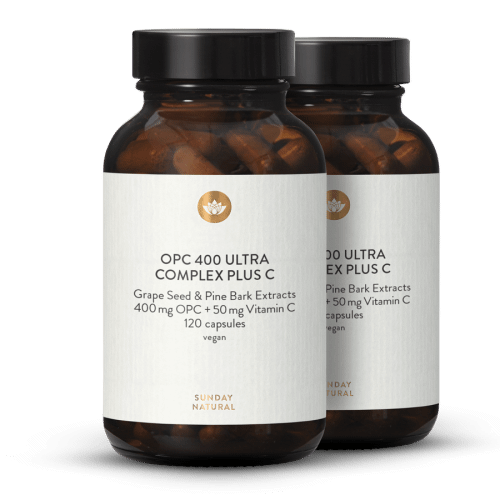
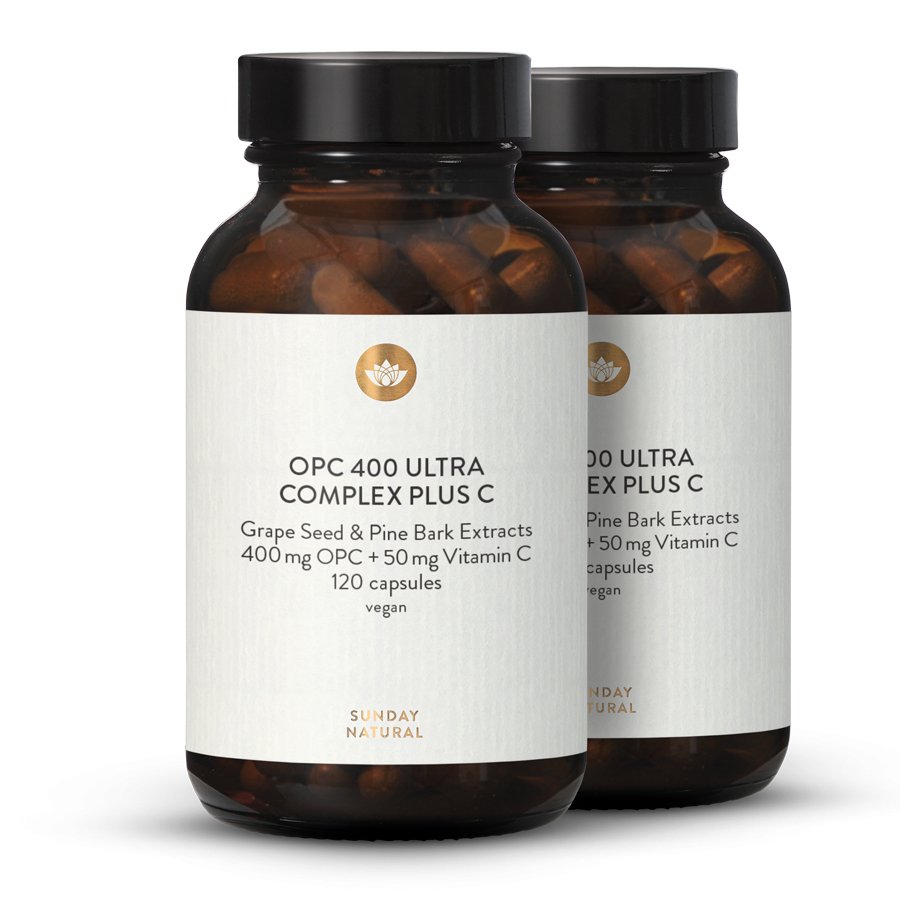
Unlike many other OPC supplements, our OPC 400 Ultra is obtained using water and food-grade ethanol, without the use of other chemical solvents. The resulting extracts are highly pure and completely natural; they have never come into contact with the usual chemical solvents such as N-hexane. All of our products are guaranteed free from additives such as maltodextrin and peanut powder, which many manufacturers add but which unfortunately do not need to be disclosed on product labelling.
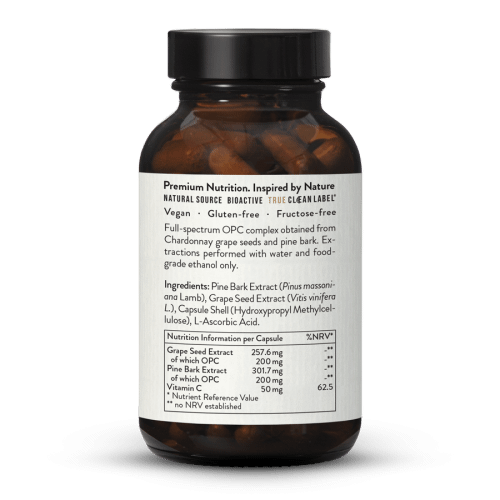
In order to increase potency and maximise purity levels, we look for the highest possible OPC content when sourcing our raw materials. Both of our extracts contain at least 95% polyphenols. While many manufacturers confound polyphenols with OPCs, the manufacturer of our raw materials has also provided us with the actual OPC content for each of our extracts: 77.6% for the grape seed extract and 66.3% for the pine bark extract. We then tested our grape seed extract via the HPLC test to break down the mono-, di-, tri-, tetra-, penta- and polymers: not including the monomers (which are not counted as OPCs), the pure OPC content was shown to be about 77.5%. The same laboratory test is not yet available for pine bark extracts, but the TU Braunschweig is currently developing a new method upon our request which breaks down pine bark extracts according to their individual polymers.
The 99%+ concentrated vitamin C is produced by a complex, highly pure manufacturing process from non-GMO corn and acts as a synergistic complement to our OPC.
For the capsule shells we use custom-made HPMC capsules that, unlike most other HPMC and pullulan capsules on the market, are 100% free from controversial additives such as carrageenans and PEG. We then package this product in environmentally friendly amber glass.