Vitamin B12 (Cobalamin)
Vitamin B12 fulfils a number of important functions in the body: it can help to reduce tiredness and fatigue and maintain a normal energy metabolism; it contributes to the normal functioning of the psyche, immune and nervous systems; supports the formation of red blood cells; and is beneficial for normal homocysteine metabolism. The body also needs vitamin B12 for cell division.
Vitamin B12 acts as a so-called coenzyme in the body, meaning it is necessary for certain enzymes to fulfil their tasks. The associated reactions are directly dependent on vitamin B12 and cannot take place without it.
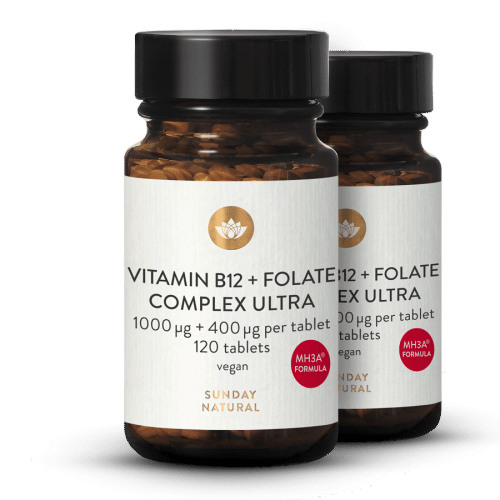
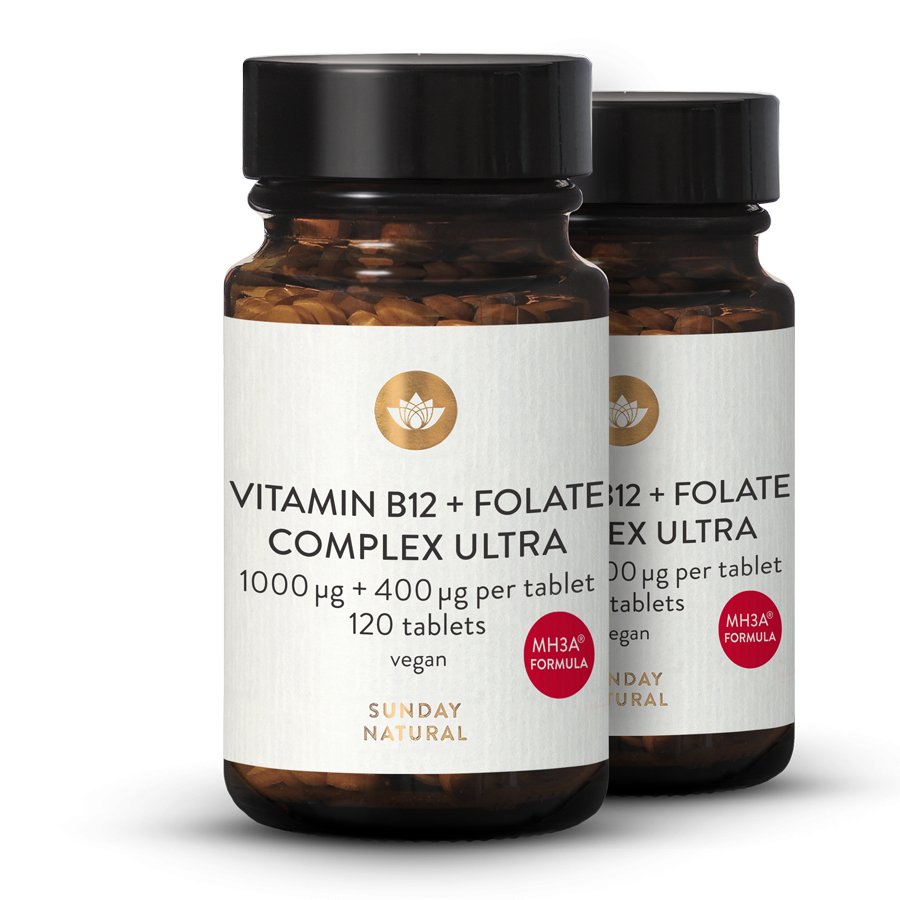
Vitamin B12 MH3A® Formula
Vitamin B12 exists in different chemical forms, each with different functions within the body. The natural forms of vitamin B12 that can be readily absorbed by the body are described as "bioactive coenzymes." Synthetic forms of vitamin B12 such as cyanocobalamin must be first coverted into a natural form by the body in order to be effective, which is why we use naturally bioactive vitamin B12.
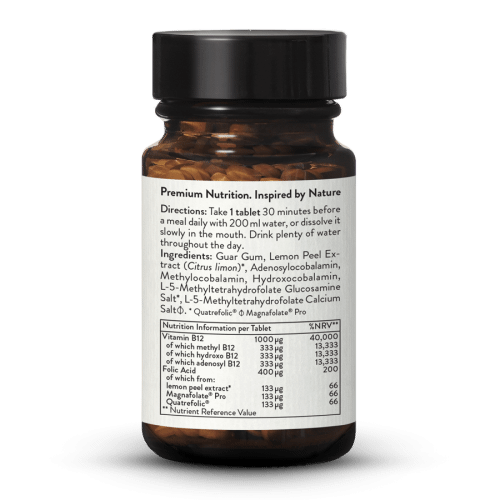
The biologically active coenzyme forms of vitamin B12 in the body are called methylcobalamin and adenosylcobalamin. Both act at different places and in completely different reactions, which is why humans need both forms of vitamin B12 and can also convert them into each other. Methylcobalamin is active in the cytoplasm as a part of the methylation cycle, which has a broad impact on various aspects of our health such as blood formation, brain health, and the nervous system. Adenosylcobalamin, on the other hand, is active within the mitochondria – the "powerhouses" of cells – where it is part of the citric acid cycle, considered the main metabolic cycle for energy production.
Hydroxocobalamin is another natural form of vitamin B12 that can be found in many food products. Most of the vitamin B12 in the blood is in the form of hydroxocobalamin. Hydroxocobalamin binds particularly well to vitamin B12 transport molecules and is therefore excreted less quickly; as a result, it is considered the B12 with the best repository properties. Hydroxocobalamin can be easily converted by the body into the active coenzyme forms as needed.
Vitamin B9 Folate (Folic Acid)
Folate, also known as vitamin B9, is involved in a variety of important body functions. This essential vitamin contributes to energy metabolism, it can reduce fatigue and tiredness and it supports the immune system as well as mental functioning. It is required for haematosis, cell division, homocysteine metabolism and forming amino acids. Folate also plays a role in the growth of maternal tissue during pregnancy.
Synthetic folic acid must first be converted into folate in order to be bioactive. This conversion cannot always proceed in the body without issue, as a number of cofactors and enzymes are necessary for it to occur. The optimal, biologically active form of folate is called L-methylfolate (or, more precisely, L-5-methyltetrahydrofolate, or L-5-MTHF). L-methylfolate is an important methyl donor and an essential component of the methylation cycle.
According to the European Food Safety Authority (EFSA):
Vitamin B12 contributes to:
- normal energy metabolism
- normal functioning of the nervous system
- normal homocysteine metabolism
- normal mental function
- normal formation of red blood cells
- normal function of the immune system
- reduction of tiredness and fatigue
- cell division
According to the European Food Safety Authority (EFSA):
Folate contributes to:
- the growth of maternal tissue during pregnancy
- normal amino acid synthesis
- normal hemopoiesis
- normal homocysteine metabolism
- normal cognitive function
- normal immune system functioning
- the reduction of tiredness and fatigue
- cell division