Vitamin D
Vitamin D3 is found almost exclusively in animal products, namely meat, dairy and eggs. Lichens also contain vitamin D, as do various fungi. The latter, however, only contain the less effective vitamin D2. Vitamin D is a very peculiar vitamin. In the classical sense it is not a vitamin but rather a pro-hormone.
In contrast to many other vitamins, vitamin D is converted into an important hormone which regulates cell functioning and bodily processes. Almost all bodily cells have special receptors for the vitamin D hormone that are dependent on sufficient supply.
The National Health Service (NHS) recommends a daily intake of 10μg (400 IU) of vitamin D for those 1 year of age and older, inclusive of those pregnant, breastfeeding and at risk of vitamin D deficiency. The NHS recommends a daily intake of 8.5-10μg of vitamin D for babies up to the age of 1 year. However, it is important to note that individual vitamin D needs may vary according to geographic location (sun exposure), dietary habits, genetics and other factors.
Vitamin K2 MK-7
Vitamin K2 MK-7 is today considered by far the most effective form of K2. However, since vitamin K2 molecules occur in a variety chemical structures (the so-called cis–trans isomers of vitamin K2), there are considerable differences in efficacy even between different vitamin K2 MK-7 compounds. It is believed that only the trans forms can be utilised by the body.
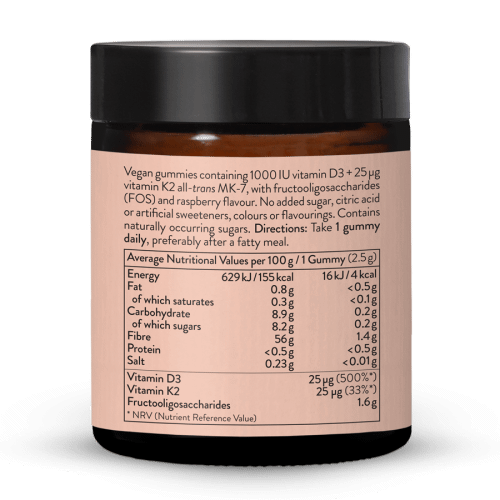
Vitamin D and vitamin K2 are cofactors in the regulation of calcium metabolism. Together, the two vitamins form and break down bones as well as the important transport molecules which ensure the correct utilisation of calcium. Sunday Natural Vitamin D3 and K2 MK-7 combine the two nutrients in a ratio that ensures optimal interaction.
Currently, almost all authorities do not consider vitamin K2 separately, but all K vitamins together. Accordingly, the statements released for vitamin K1 currently apply to vitamin K2.
The National Health Service (NHS) recommended daily intake for vitamin K is 1 microgram per kilogram of body weight (e.g., 65 micrograms daily for a 65kg adult).